The abominable lifestyle that most people in Delhi lead nowadays is nothing less than bizarre. The psychological stress and physical strain drain out individuals at the end of the day, and yet every morning, they push through, trying to get to the next day. People wake up, and the vicious cycle continues. An escape from this exhausting routine is essential. Why? Because the body that sustains you consists of two fundamental elements: mind and soul. Achieving overall wellness is the key to living a healthy life, and thankfully with a Wellness centre, South Delhi Delhi, you can incline towards the holistic and spiritual side of living.
But first, what is wellness?
Wellness can be defined as a multifaceted active process that culminates in a fulfilling life and health in itself. On the other hand, health is a state of well-being that incorporates physical, mental and social factors. You might be healthy, but what about your overall well-being?
Wellness lays the cornerstone for a positive and affirming life. With a wellness centre in the picture, people can work on multiple components, including spiritual well-being, lifestyle, mental well being and even the environment around them.
The significance of a wellness centre
The concept of a wellness centre isn’t new. It was developed in 19th century Europe by a variety of medical, intellectual and religious movements that were founded parallel with conventional medicine. As the movement evolved, proliferated and went mainstream, wellness centres became the new holistic way of living. Now wellness centres practice and preach the art of healthy living, self-care, self-help, nutrition, diet, fitness, and spirituality.
Searching for a Wellness centre, South Delhi Delhi? You can always go for the one that offers to counsel using more than 14 alternative healing modalities. Ranging from Reiki to mindful meditation, you can use different techniques to balance your energy and harmonise your mind, body and spirit. Whether you are in search of emotional stability or you want overall personal growth and empowerment, wellness centres can be the positive U-turn of your life. They offer you different remedies, including:
- Clinical Hypnotherapy
- Stress and anger management
- Goal motivation and achievement
- Neuro-Linguistic programing
- Bach flower remedies
- Guided meditations and visualisations
- Anxiety and depression management
- IEMT or Integral Eye Movement Therapy
- Family Counseling, and more
Healing isn’t a single day process; it is a cycle, and going to a wellness centre can be the epicentre of it.
The main approaches, one by one
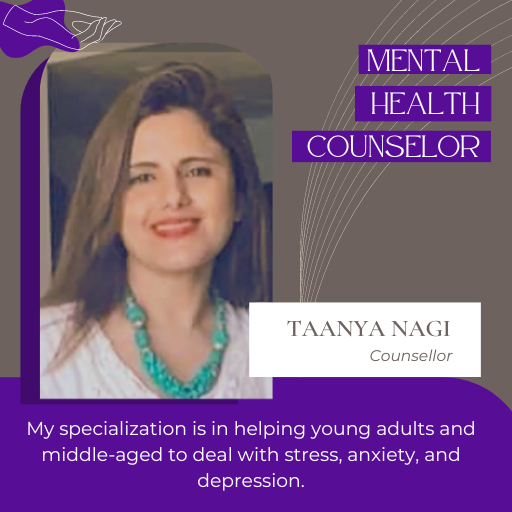
The list above is long, and lists do not help you choose. Here is what the main approaches actually involve, who developed them, and how much confidence you can place in each. All of them are offered by one practitioner, Taanya Nagi, a counselling psychologist and clinical hypnotherapist based in Anand Niketan, South Delhi, so the descriptions below are her own working view rather than marketing.
Counselling psychology
This is the foundation. Counselling draws on cognitive behavioural therapy, rational emotive behaviour therapy, transactional analysis and Gestalt work, and it has the strongest research base of anything on this page. It suits anxiety, low mood, grief, relationship difficulties and the slow work of changing patterns you have carried for years. If you are unsure where to begin, begin here.
Clinical hypnotherapy
Hypnotherapy uses a focused, relaxed state to work with suggestion and imagery. There is reasonable evidence for its use alongside medical care for pain, irritable bowel symptoms and some habits, and it is widely used for specific fears, sleep and performance nerves. It is not mind control and it does not work on anyone who does not want it to. It complements psychiatric treatment rather than replacing it.
EFT tapping and IEMT
Both are brief, body-focused techniques. EFT, developed by Gary Craig in the 1990s from Roger Callahan’s Thought Field Therapy, combines tapping on acupressure points with statements of self-acceptance; trials report reductions in anxiety and stress, though critics note the exposure element may explain most of the effect. IEMT, developed by Andrew Austin in the UK, uses guided eye movements to reduce the charge on a recurring feeling. Its research base is small. Both are useful tools within counselling rather than treatments in their own right.
Reiki and chakra healing
Reiki is a Japanese practice of gentle, hands-on or hands-near rest developed by Mikao Usui in the 1920s; chakra work draws on the Indian model of seven energy centres. Neither has evidence of effect beyond relaxation, and both are offered here honestly as restful, supportive practices. Many people find them deeply settling, particularly when they are too depleted to talk. They are never a reason to delay medical care.
Bach flowers, crystals and colour
Bach Flower Remedies were created by Dr Edward Bach in 1930s England as thirty-eight essences matched to emotional states. Crystal therapy and colour therapy have roots in Egyptian, Vedic and Greek traditions. Controlled studies show no effect for any of the three beyond placebo. Their value, when there is value, lies in the ritual: pausing several times a day, lying still for half an hour, naming what you feel. Used that way, alongside counselling, they can be a kind, low-cost part of self-care.
What the evidence says, in one paragraph
Psychological therapy and, where needed, psychiatric care are the treatments. Hypnotherapy has moderate evidence for specific uses. EFT has promising but contested evidence. IEMT, Reiki, chakra work, Bach flowers, crystals and colour therapy are supportive practices without evidence of treating any condition. A responsible holistic practice keeps these tiers clearly separate, uses the supportive practices to make the treatment easier to bear, and refers you onward when something is beyond its scope.
How to choose
Ask yourself two questions. Do I need to understand something, or do I need to rest? Understanding points to counselling or hypnotherapy. Rest points to Reiki, crystal or colour work, ideally alongside counselling rather than instead of it. And then a third question, which matters most: am I safe? If you are thinking of harming yourself, if you cannot function day to day, or if you have stopped eating or sleeping, none of the complementary approaches are the right first call. Speak to a doctor, or ring Tele-MANAS on 14416, the free 24-hour helpline run by the Government of India.
A note on safety and honest expectations
No approach on this page cures anything. Holistic simply means that mind, body, relationships and meaning are all taken into account, and that supportive practices are allowed to sit next to treatment. If any practitioner tells you to stop medication, skip a specialist appointment or rely on crystals for a diagnosed illness, walk away. The measure of good holistic care is that it makes it easier, not harder, to get the medical and psychological help you need.
Learn To Be Sustainably Happy!
Sustainable happiness is not a feeling you find in a single session. It is the result of small practices held over time, honest conversations with someone trained to listen, and the willingness to ask for more help when you need it. If you would like to talk about which approach fits where you are now, a 15-minute call with Taanya is the simplest place to start.